Computers in India
Introduction
Before I begin this article, I'd like to apologize to readers for the limited information provided. Unfortunately, for many computers, I was unable to find any information at all, or only the bare minimum.
But I still hope to write a more detailed and nuanced version of this article in the future.
The 1950s-1970s
When discussing the history of computerization in India, people often begin with the HEC-2M (Hollerith Electronic Computer Model 2M) at the Indian Statistical Institute (ISI) in Calcutta. But I think this is incorrect, as this computer was developed in England and was simply installed in India. So, I think we should start with the analog computer developed at the ISI.
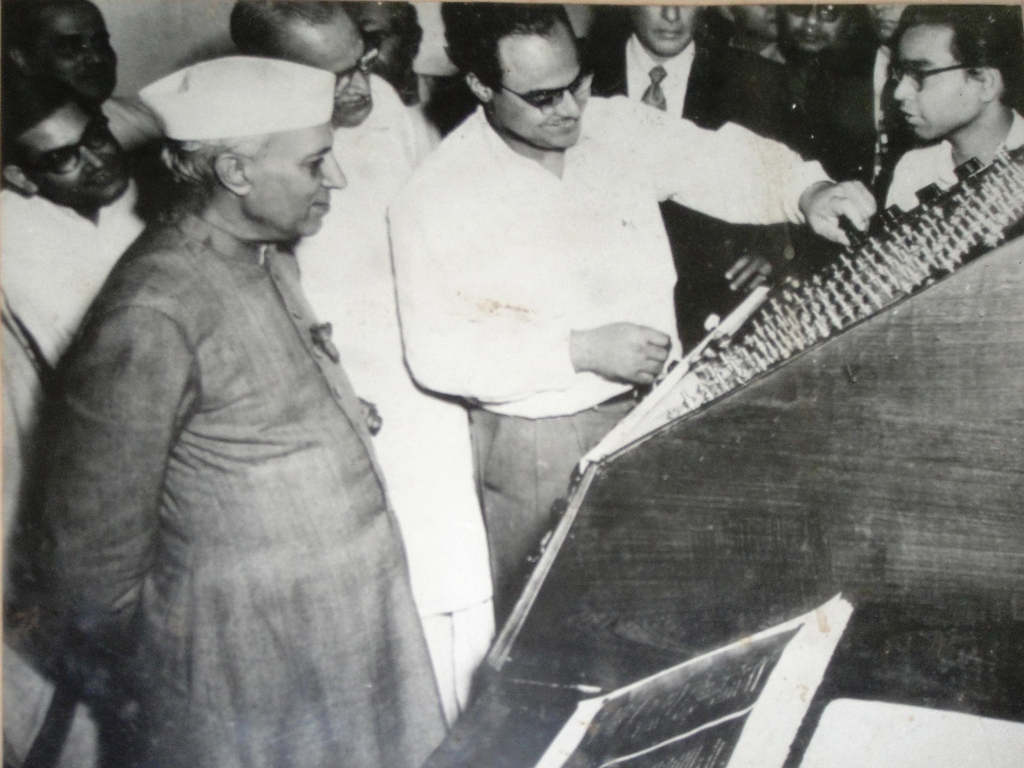
India's first analog computer. Photo source: KASS Computer Museum
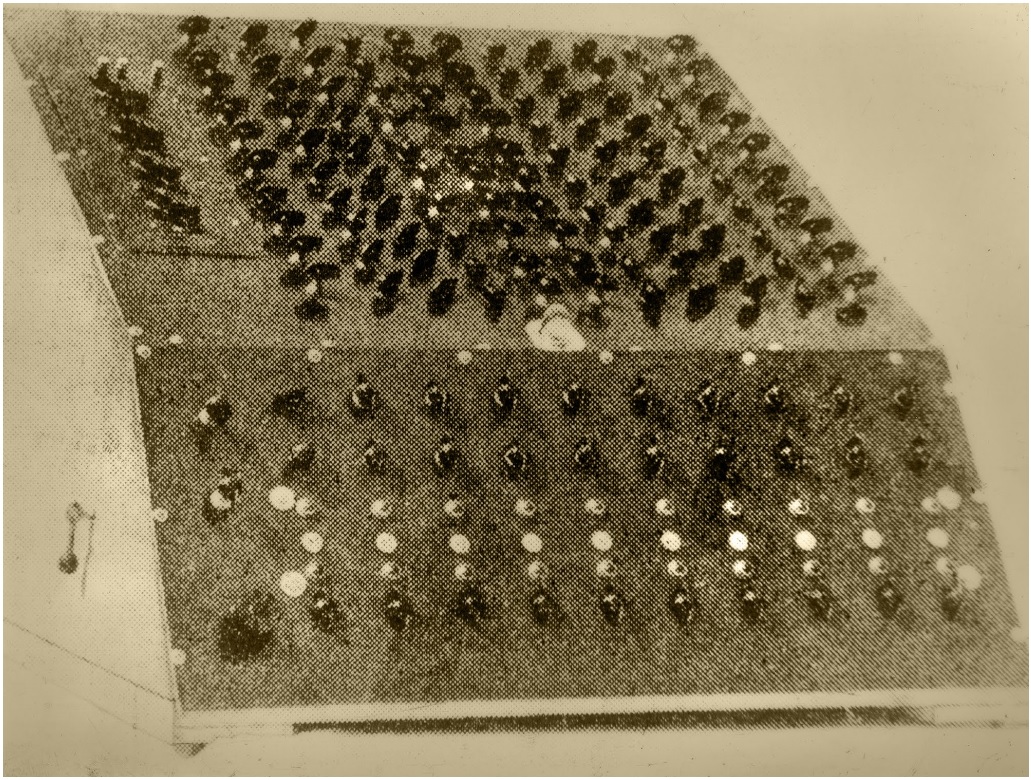
It's closer - photo from ISI
Unfortunately, not much information about it has survived. It was developed by Samarendra Kumar Mitra in 1953. It was an analog computer capable of solving linear equations with 10 variables using a modified version of the Gauss-Seidel iterative method.
The next milestone in India's IT industry was the creation of the first digital computer-the TIFRAC (TIFR Automatic Calculator), a vacuum-tube computer developed at the Tata Institute of Fundamental Research. It was launched in 1960.
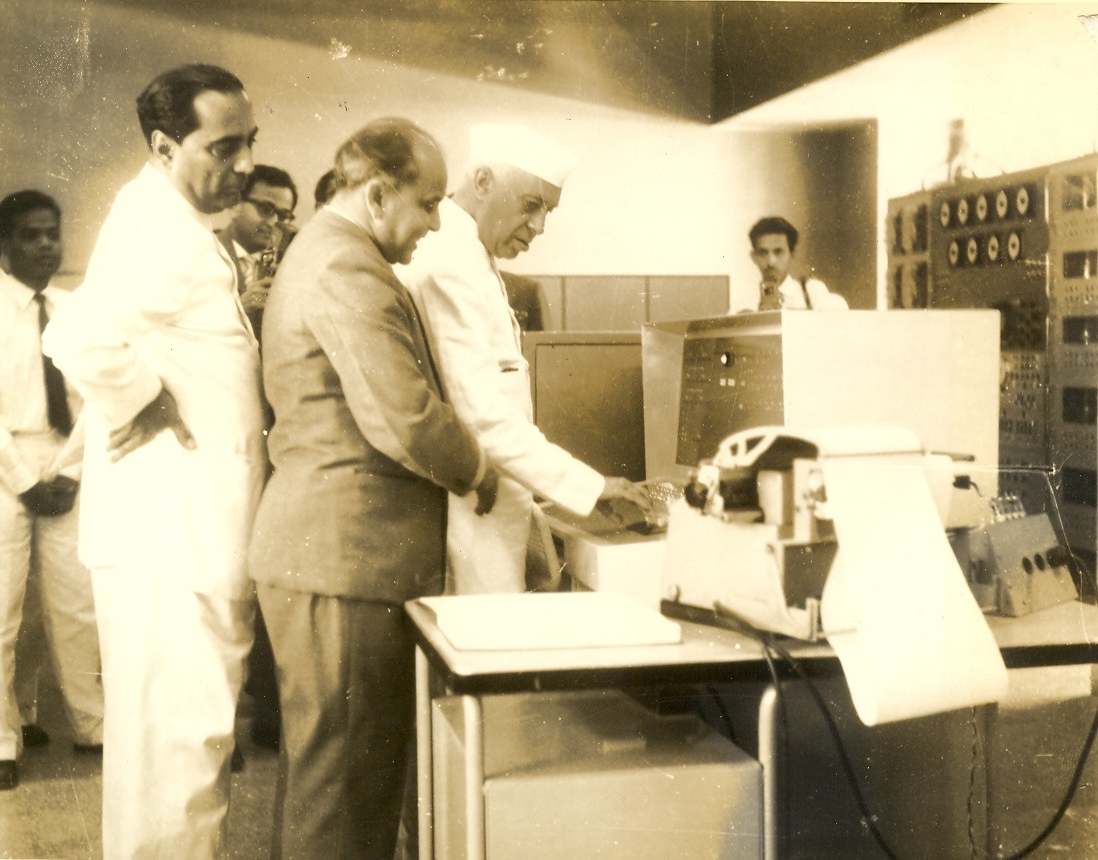
TIFRAC. Photo source - KASS Computer Museum
TIFRAC contained 2,700 vacuum tubes, 1,700 germanium diodes, and 12,500 resistors. It had 2,048 40-bit words of ferrite-embedded memory.
The display used could display both text and graphics.
The performance was approximately several thousand operations per second.
The next stage was the ISIJU project, which was completed in 1966. This was already a transistor-based computer.
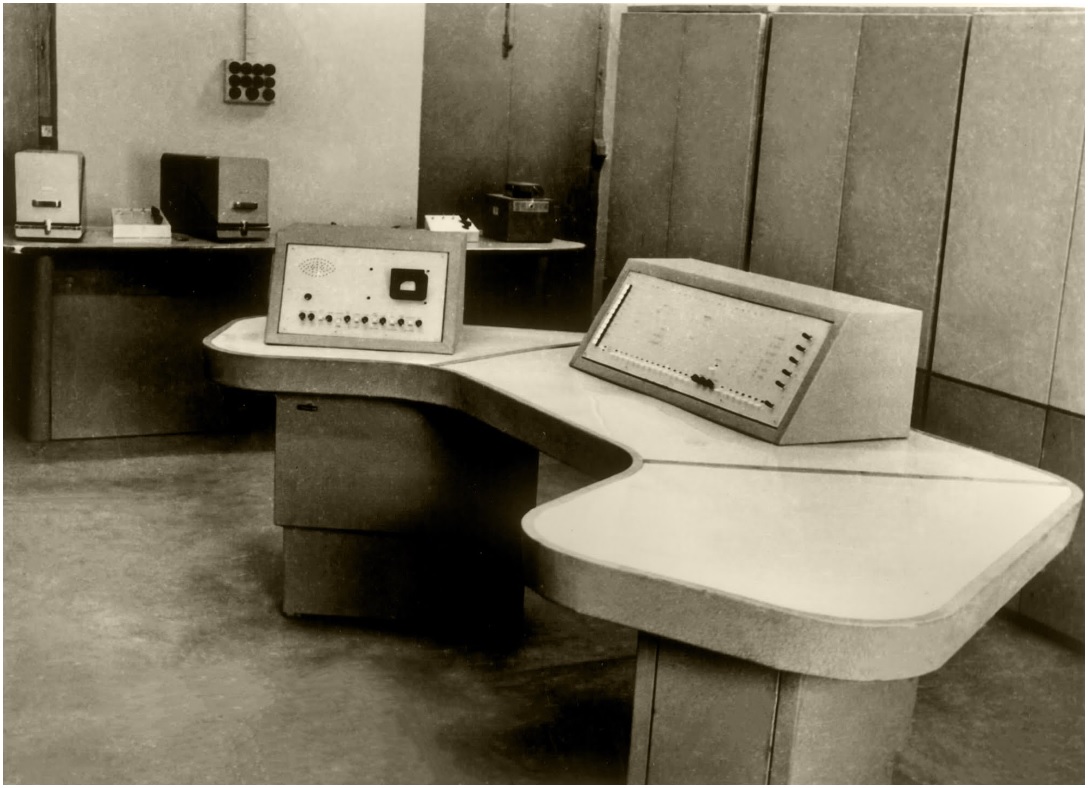
ISIJU - photo by ISI
1969 marked the launch of the Trombay Digital Computer (TDC) series of computers. That year, ECIL released the TDC-12.
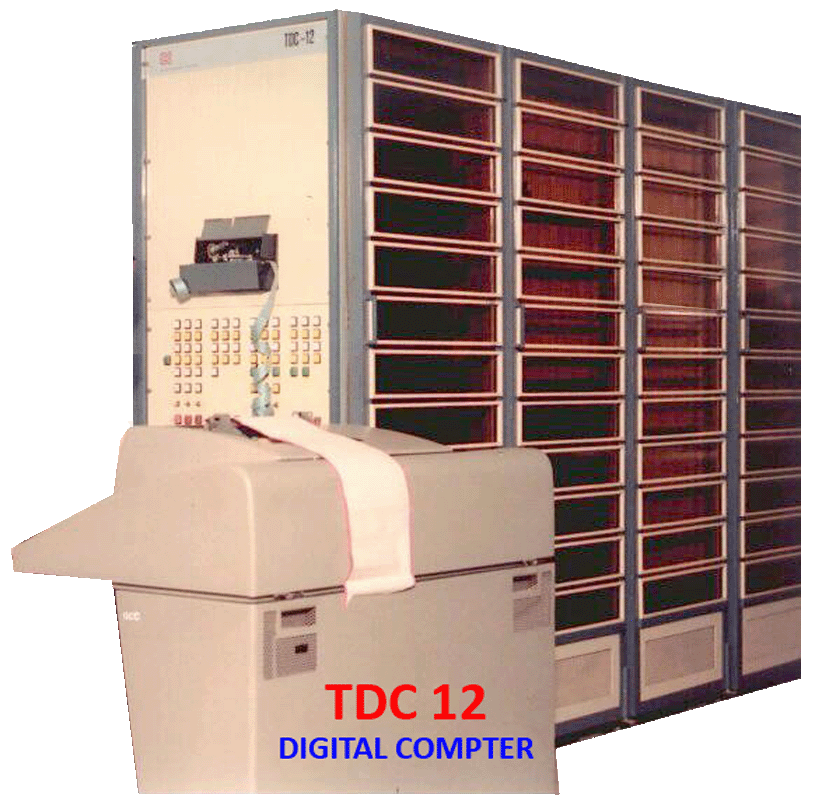
Photo by http://www.ourcmg.com
It was interesting because it had a 12-bit working word. Its architecture was similar to the then-popular PDP-8, but the TDC-12 had several additional instructions.
In the 1970s, the TDC-312 and TDC-316 were released. The specifications of these computers are listed below:
| Computer | Word length (bits) | Memory size (words) | Cycle time (microseconds) | Technology | Software | Typical price (Rs.) |
| TDC-12 | 12 | 4K - 32K | 2 | vacuum tubes | Assembler, FORTRAN II | 600,000 |
| TDC-312 | 12 | 4K - 32K | 2 | IC | Assembler, FORTRAN II | 1,000,000 |
| TDC-316 | 16 | 8K - 32K | 1 | IC | Assembler FORTRAN IV and COBOL | 3,000,000 |
In 1978, ECIL released the first microprocessor-based system, the MICRO 78.
The 1980s-1990s
Prior to that, computers were very expensive and were manufactured almost exclusively with government support-either fully or partially. But in the 1980s, the situation changed, and many private companies emerged in India that also began manufacturing computers.
This period can be called the era of personal computers.
Unfortunately, there isn't as much information about the first Indian PCs as we'd like.
First, we need to go back a bit, because the first "personal" computer was developed by Hindustan Computers Limited (HCL) as far back as 1978. The model was named the HCL 8C. The computer was built around the Rockwell PP 8 microprocessor and was intended for small and medium-sized businesses. However, this model would hardly be called a personal computer today, since it was quite large, used magnetic tape drives, and so on.
Unfortunately, I wasn't able to find a photo of the HCL 8C - just a low-quality drawing in one of HCL's presentations:
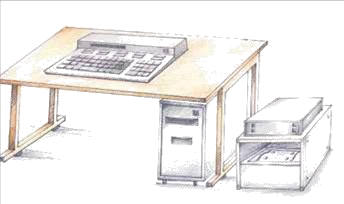
You can read more about the history of its development here.
Later, in 1983, HCL released the Workhorse model, which already looked like the PCs we're familiar with today, and a little later (in 1985), the Busy Bee model. It was an IBM PC-compatible computer with an 8088 processor running at 4.77 MHz, 256 KB of RAM, and two 5.25-inch floppy drives. It cost about $7,000.
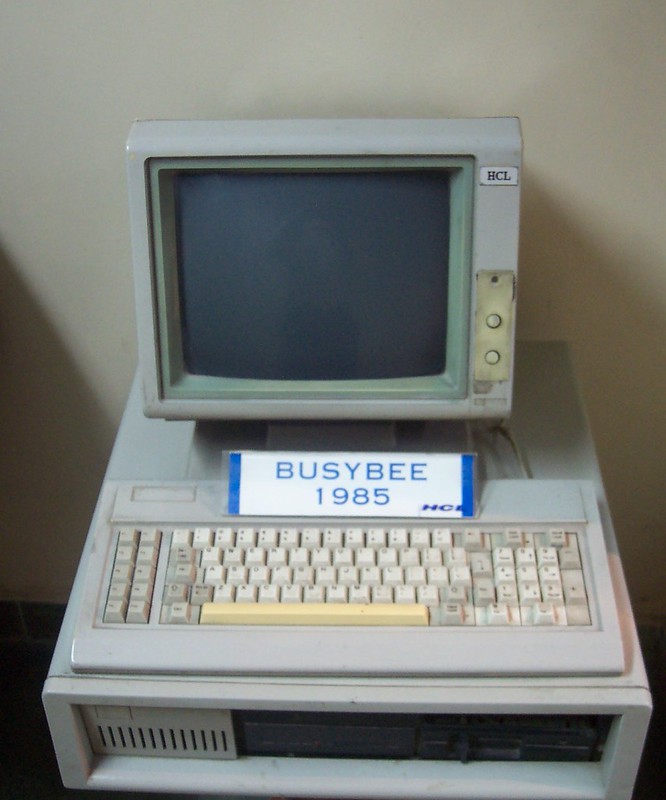
Photo by BrandHCL
Here's a video review of this computer
Wipro (Western India Palm Refined Oil Ltd.) became another personal computer manufacturer; it launched its Wipro 86 series in 1981. The first computers in the series used an Intel 8086 microprocessor and the Multibus bus.
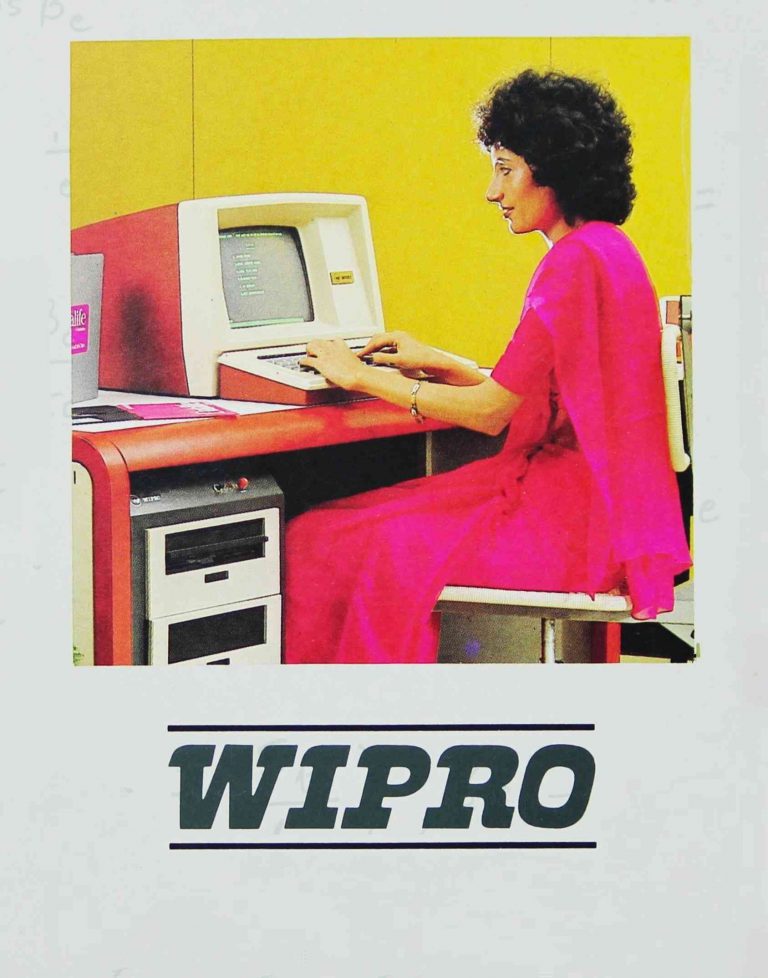
Photo source
Another personal computer manufacturer in India was Sterling Computers (based in Chennai-formerly Madras); they produced an IBM PC clone called Shiva (sometimes spelled Siva). Unfortunately, aside from mentions of the Siva PC and XT, no other information could be found.
And finally, the last company in our article is Maijo Data Products. All we know about this company is that it manufactured IBM PC-compatible computers in the late 1980s. This advertisement has survived:
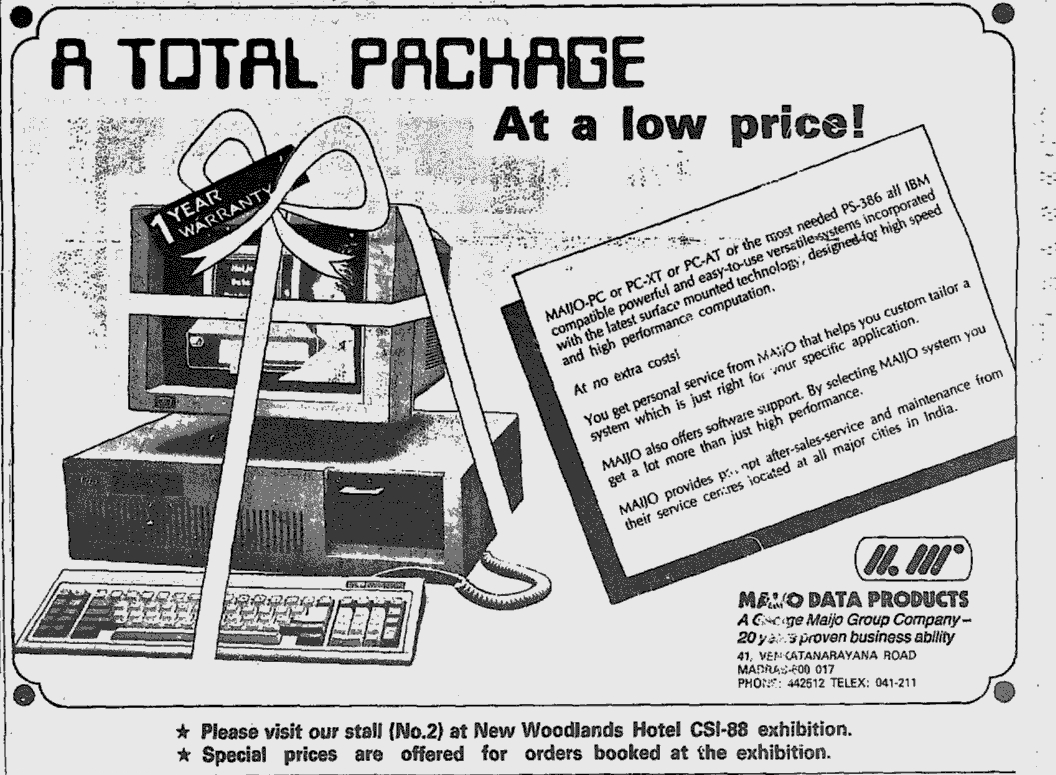
Photo source
Well, let's get back to supercomputers. Their development, of course, has not stopped, which brings to mind an interesting story: The Indian Institute of Science in Bangalore ordered a Y-MP vector supercomputer from Cray for approximately 500 million rupees. However, in 1989, U.S. authorities denied the export license, and the computer was never delivered. Instead, several smaller systems were purchased. On the surface, this seemed like a negative event-the deal fell through, etc. - but it gave a boost to the development of India's own supercomputers. As a result, the PARAM 8000 was developed, with a performance of 1 GFLOPS. It was built using 64 Inmos T800 transprocessors. The PARAM series continued to evolve-subsequent models included the PARAM 8600, PARAM 9000, PARAM 10,000, and so on.
Conclusion
In closing, I would like to apologize to readers for this somewhat disjointed and fragmented overview. Unfortunately, I was unable to find information on some computers, and there are some inconsistencies here and there. However, this article will be gradually expanded and improved.
I hope I've managed to spark your interest in the history of computer development in India. It's a multifaceted story, full of ups and downs, with its own share of major and minor dramas, and it certainly deserves to be remembered and honored.