Below are the milestones of computerization in India
1953 – S.K. Mitra built the first Indian analogue computer at the Indian Statistical Institute in Calcutta.
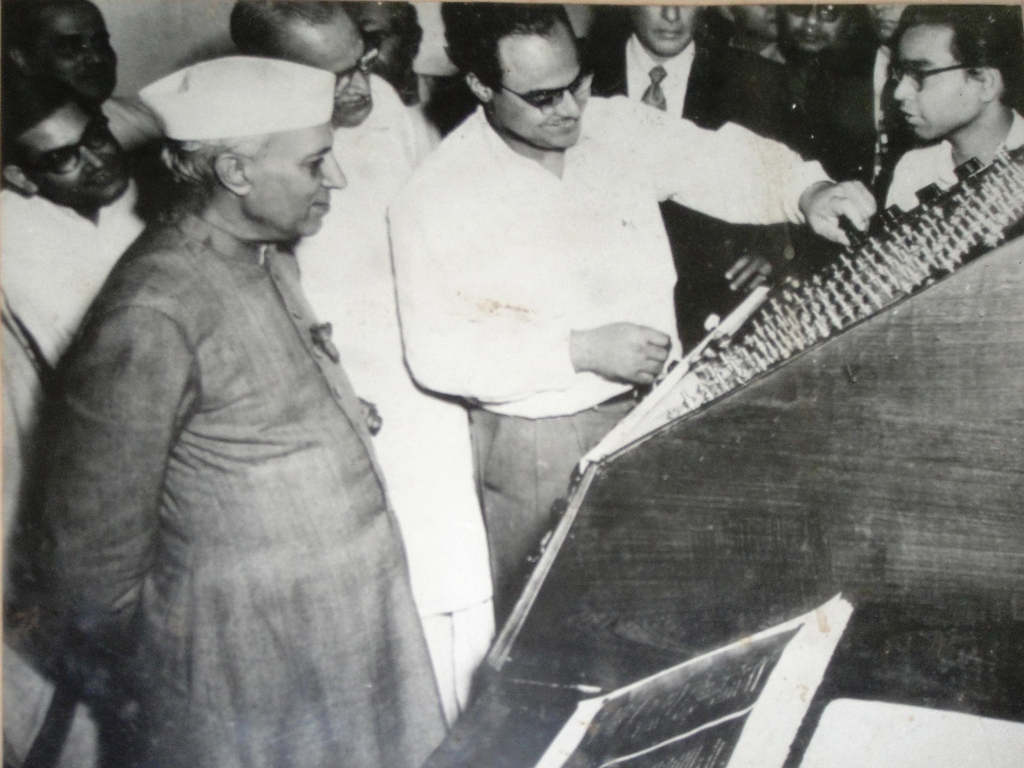
India's first analog computer. Photo source: KASS Computer Museum
1955 – installation of the English-developed HEC-2M (Hollerith Electronic Computer Model 2M) computer at the Indian Statistical Institute (ISI) in Kolkata.
1960 – TIFRAC (TIFR Automatic Calculator), a vacuum tube computer developed at the Tata Institute of Fundamental Research, was put into operation.
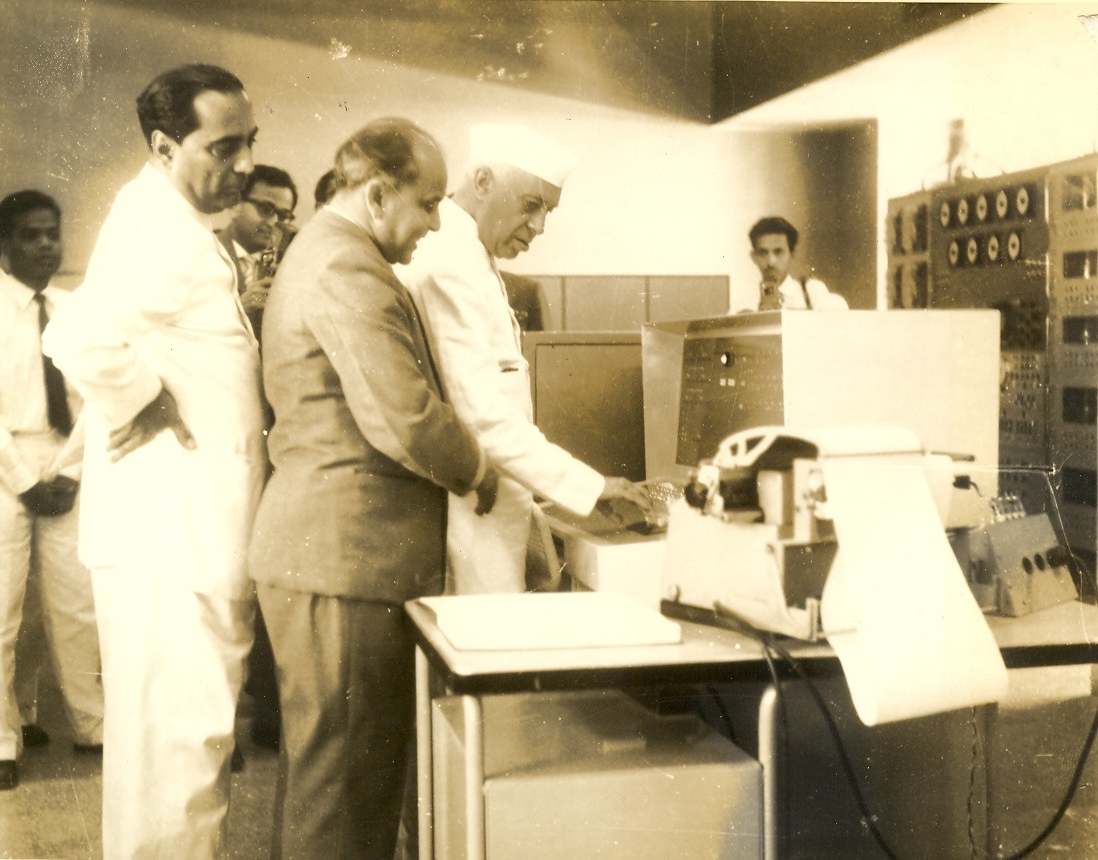
TIFRAC. Photo source: KASS Computer Museum
1961 – ESSO, a private oil company operating in India, has purchased an IBM 1401 computer.
1963 – An IBM 1620 computer was installed at the Indian Institute of Technology in Kanpur.
1964 – A CDC 3600-160A computer purchased from the USA was installed at TIFR.
1966 – ISI, together with Jadavpur University, completed work on the ISIJU, a next-generation transistor computer. And the Indian Institute of Technology Kanpur acquired an IBM 7044.
1967 – Electronics Corporation of India Ltd. (ECIL) was established.
1968 – Tata Consultancy was founded.
1969 – The Trombay Digital Computer – 12 (TDC-12), a 12-bit computer, was introduced.
1970 – The Department of Electronics (DoE) was established. The most popular computer in India was the IBM 1401, with about 80 units in operation. The second most common was the ICL 1901A.
1972 – The Department of Electronics established the National Centre for Software Development and Computing Techniques (NCSDCT) at TIFR, Mumbai. It later became the National Centre for Software Technology (NCST).
1974 – The successor to the TDC-12 was the transistor TDC-312.
1975 – The 16-bit TDC-316 computer was developed. Also that year, the Department of Electronics established the National Information Center.
1976 – Computer Maintenance Corporation (CMC) was established.
1977 – A regional computer centre has been established at Jadavpur University.
1978 – IBM is shutting down its operations in India. It will be partially replaced by the previously established CMC, as well as International Data Machines (IDM), established this year.
1979 – Four companies begin producing mini-computers in India: ORG, DCM, HCL and IDM.
1980 – The Master of Computer Applications (MCA) educational program was launched. Also this year, the Tata Research Design and Development Centre (TRDDC) and the accounting software developer TALLY were established.
1981 – Infosys is founded. That same year, Wipro releases a computer based on the 8086 processor.
1983 – NCST builds a VSAT network with 32 kbps packet switching. That same year, MASTEK opens a software development company in Mumbai.
1984 – This year, a research group called the Centre for Development of Telematics (CDOT) was formed. The Indian government approved the establishment of a National Supercomputing Centre at the Indian Institute of Science in Bangalore, allocating a grant of 500 million rupees. The Department of Electronics allocated 340 million rupees to establish computer-aided design (CAD) centres at the Indian Institute of Technology Kanpur, the Indian Institute of Technology Bombay, the Indian Institute of Science Bangalore, and Jadavpur University.
1985 – The Department of Telecommunications (DoT) was created. The Education and Research in Computer Networks (ERNET) project was launched.
1986 – CMC created a network of IBM 4342 mainframes known as Indonet.
1987 – terling Computers launches Shiva PC priced at Rs 29,000.
1988 – The National Association of Software and Service Companies (NASSCOM) was founded. That same year, the Cray XMP 14 supercomputer was installed at the Center for Medium-Range Weather Forecasting.
1989 – NCST connects ERNET to the Internet via UUNET.
1990 – DoE establishes Software Technology Parks using shared satellite links to facilitate software exports.
1991 – HCL Technologies is founded. The National Supercomputer Center at IISc, Bangalore, begins operations, using Cyber 992, two CDC4360, a VAX8810, nine IBM 6000/580, 48 IBM RS6000/340, 24 Silicon graphics workstations, and 25 Sun workstations. CDAC completed the design of the PARAM parallel computer with a speed of 1 GFLOPS.
1992 – VSNL provides 64 kbps dedicated line services.
1993 – The Indian Satellite Development Centre in Bangalore has installed a distributed computing system consisting of 9 IBM RS6000/530, 9 RS6000/220 and 33 RS6000/220.
1994 – Private companies are allowed to provide mobile communication services.
1995 – The first commercial internet service was launched by VSNL.
1996 – NASSCOM establishes a task force to address the Y2K problem. That same year, the Rediff.com portal was founded.
1997 – DSP Ankur was developed by TI India's Bangalore center.
1998 – A Microsoft software development center opened in Hyderabad. A Motorola design center was established in Delhi. An IBM research center was established in New Delhi.
1999 - INFOSYS is listed on the NASDAQ.
2000 – India's software exports reach US$5 billion.